Director's Note
From the Wings to the Waiting Room: Transferring Our "Stage Bravery"
To the NESA Community,
It doesn’t matter which hall you walk at NESA or which major defines your day. Whether you are prepping for a piccolo solo, perfecting a grand jeté, or obsessing over the precise construction of an elaborate set, we all know that familiar tightening in the chest.
As artists, we are in the business of vulnerability. We lay ourselves out to be judged and consumed by the public eye. In many ways, we are masters of fighting our own fears. But lately, I’ve been asking myself: Why is it so hard to transfer that bravery to the rest of our lives?
The "Surgical" Side of Anxiety
I’m not just speaking to the students; I’m speaking from the heart of my own experience. This coming Wednesday, I have a minor surgical procedure. I know it’s minor. I know that anxiety is a wasted emotion in this context. Yet, I still find myself caught in that familiar loop of "what ifs."
I have a coaster on my desk that reads: "Life begins at the end of your comfort zone." It is a wonderful sentiment, but that doesn't make it an easy one As I’ve analyzed my own nerves, I realized the problem: I have compartmentalized my bravery. I have a "Stage Box" where I am brave, and a "Life Box" where I let anxiety run the show.
Why Does This Happen?
Research into Performance Psychology suggests that artists often develop "state-dependent" confidence. We feel brave in the theater because we have a script, a costume, or a technical plan. When life throws us a "surgical procedure" or an unplanned hurdle, we feel exposed because there is no rehearsal.
The key to growth is opening those spheres and letting the bravery of the stage infuse the mundane (and sometimes scary) moments of reality.
The Practice of Self-Compassion
Is it easy? Ha! No. Do I backslide? Absolutely. But I’m learning a few things that I hope might help you, too:
Recognize the Loop: Don’t let anxiety be a silent passenger. Name it.
Stop the Double-Down: We often get anxious, and then get angry at ourselves for being anxious. This is "The Second Arrow." The first arrow is the event; the second arrow is the self-judgment. Drop the second arrow.
Use the Artist’s Eye: Treat your fear as a point of introspection. Ask it: “What are you trying to protect me from?”
"Courage is not the absence of fear, but rather the assessment that something else is more important than fear." — Franklin D. Roosevelt
I write this because I know that so many of us—students and adults alike—carry these invisible weights. My goal this week isn't to be "fearless," but to be as brave in that waiting room as our students are when the curtain rises.
We are all works in progress. Let's keep growing together.


 Wed
Wed

 Fr
Fr
Feb 6
- Today is National Pay A Compliment Day... If you are reading this you are smart and AAAHHHMAZING!
 Sat
Sat

Coming Soon
Coming soon
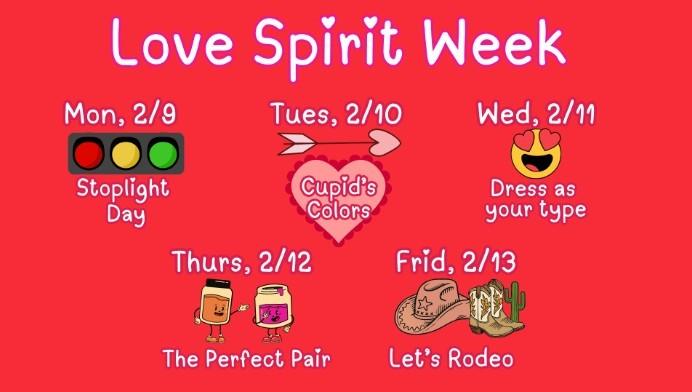
- Feb 8-14 DRESS UP DAYS! (see above)
- Feb 10 MT Travel Meeting
- Feb 11 Dance Travel Meeting
- February 20-22 & 27- March 1 Sweeny Todd!
- Mar 3 pARTners Meeting
- Mar 5 Electric Ensemble Concert
- Mar 28 pARTners Thrifting Fundraiser
- April 1 pARTners Meeting (no fooling!)
- April 2 Film Concert
- April 3 In Full Bloom Art Show Opens at the Legacy Historic Art Gallery
- April 10-12 Footnotes
- April 17-19 Creative Writing Play Offs!
- April 18 NESA Auditions
- April 18 Prom
- April 30, May 1-3 Grease
- May 8 Multiples Art Show and SALE!
- May 15 Senior Instrumental Music Concert
- May 16 800 LB Film Festival
- May 24 (THIS IS A SUNDAY) Graduation
- June 5 Senior Perspectives Art Show @Tethered in Blue Star
 pARTners News
pARTners
NESA has the BEST parents around!!!!
Our pARTners do so much for our students, teachers and parents. Currently they are in need of volunteers for the upcoming Embroidered show and Sweeny Todd. If you want to join us for a little bit of work and a whole lot of fun and camaraderie, please sign up using the link above. If you have zero time, but still want to contribute, there is also an Amazon Wishlist at the same link.
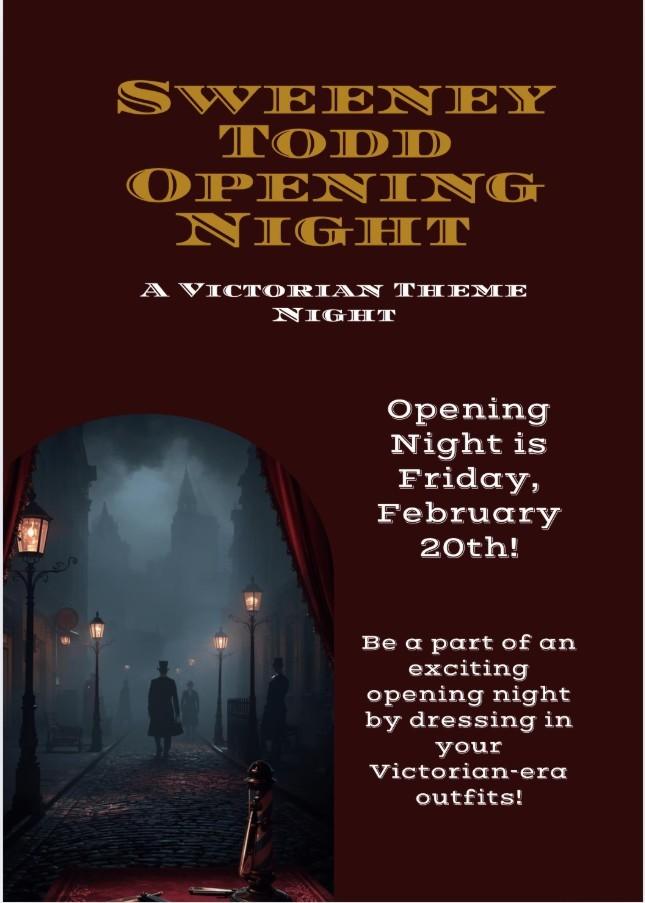
Sweeny Todd Opening Night
If you would like to join us in dressing the part, we will be wearing our Victorian outfits on February 20th. Come and join in on the fun!
BANQUET PHOTOS
If you have any photos that would be great at this year's banquet slideshow please email them to nesapartnersphotos@gmail.com
News and links
Testing Corner
Testing with Mr. Goodwin
- Feb 4- Feb 27 AP Payment Window for Spring Opens
- Mar 5 SAT (Juniors, Free😎)
- May 4-8, and 11-15 AP Testing